
Ever wondered just how low a credit score can go? Picture this: a number so low it makes a limbo champion look like a high jumper. In the world of credit scores, the lowest possible score is 300. Yep, that’s right—300, the same number of Spartan warriors who fought against overwhelming odds. But unlike those brave souls, a score this low can leave you feeling more like a couch potato than a hero.
Understanding the implications of a low credit score is crucial. It can impact everything from loan approvals to interest rates, and let’s be honest—nobody wants to pay more for a car than they would for a small island. So buckle up as we dive into the nitty-gritty of credit scores and discover what that dreaded low number really means for your financial future.
Understanding Credit Scores
Credit scores play a crucial role in financial decision-making. These numbers reflect an individual’s creditworthiness, affecting loan approvals and interest rates.
What Is a Credit Score?
A credit score ranges from 300 to 850, with 300 being the lowest possible score. This numeric representation evaluates an individual’s credit history and risk level for lenders. Scores in the higher range indicate better credit, while lower scores suggest higher risk. These scores result from multiple factors, impacting the likelihood of securing loans or credit. Understanding credit scores can lead to better financial practices and improved borrowing opportunities.
Components of a Credit Score
Credit scores consist of five main components that contribute to the overall calculation. Payment history accounts for roughly 35% of the score, revealing whether payments occur on time. Amounts owed represent about 30%, which assesses credit utilization and outstanding debt levels. Length of credit history contributes 15%, considering how long accounts have been active. New credit inquiries affect 10%, reflecting recent applications for new credit. Types of credit used encompass 10%, indicating a mix of credit accounts, which can enhance scores when managed wisely. Each component plays a significant role in determining creditworthiness.
What Is the Lowest Possible Credit Score?
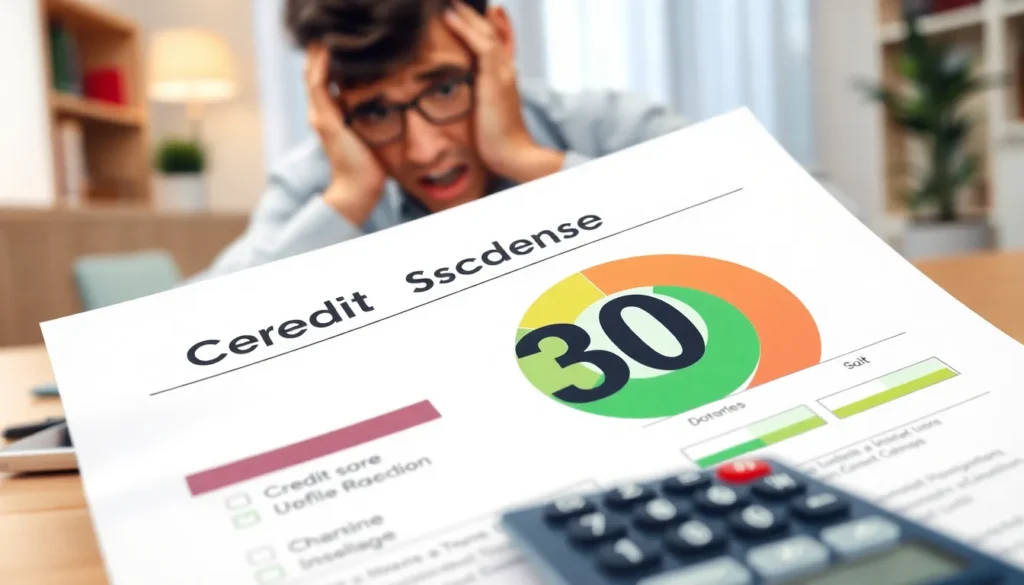
The lowest possible credit score is 300. This score signifies extremely poor creditworthiness, making financial transactions challenging.
The Range of Credit Scores
Credit scores range from 300 to 850. Scores below 580 classify as poor, while scores of 580 to 669 indicate fair credit. Good credit falls between 670 and 739. For excellent credit, scores must reach 740 or higher. Each tier affects borrowing capabilities and interest rates significantly.
Consequences of a Low Credit Score
A low credit score leads to higher interest rates. Lenders often view individuals with scores below 580 as high-risk borrowers. This perception can result in loan denials and restrict access to mortgages or favorable credit cards. Additionally, poor scores can hinder rental applications, affecting housing options. Access to insurance may also become limited, as some providers consider credit history when determining premiums.
Factors Affecting Your Credit Score
Understanding the factors affecting credit scores is vital for maintaining financial health. Five main elements contribute significantly to these scores.
Payment History
Payment history constitutes 35% of a credit score. Timely bill payments enhance this section. Missing payments or defaults negatively impact scores. Late payments can remain on credit reports for up to seven years. Each missed payment decreases perceived reliability, making it harder to secure loans. Regular, on-time payments bolster creditworthiness, instilling confidence in lenders.
Credit Utilization
Credit utilization accounts for 30% of a credit score. This ratio measures the balance on credit cards compared to the total available credit limit. Keeping this ratio below 30% optimizes scores. If a person consistently maxes out credit limits, scores suffer due to high utilization. Reducing outstanding debt improves this aspect of credit scores. Active management of credit card usage reflects responsible financial behavior.
Length of Credit History
Length of credit history contributes 15% to a credit score. Longer credit histories typically enhance scores, as they provide more data for lenders. Established accounts signal experience with credit management. Accounts older than five years tend to boost this factor. New accounts can lower the average age of credit, which may decrease scores temporarily. Maintaining older accounts helps improve and sustain higher credit scores over time.
Improving a Low Credit Score
Improving a low credit score requires actionable steps and useful resources. Focus on specific strategies to achieve better creditworthiness.
Practical Steps to Take
Pay bills on time to enhance your payment history, which constitutes 35% of the score. Reduce credit card balances to lower credit utilization under 30%, improving the 30% impact on your score. Establish a mix of credit types, such as installment loans and revolving accounts, to benefit from the 10% allocated to types of credit used. Monitor your credit report regularly to identify errors and dispute inaccuracies. Avoid opening many new accounts simultaneously, since new inquiries affect 10% of your score. These steps collectively enhance financial credibility and position individuals for better borrowing options.
Resources for Assistance
Credit counseling agencies offer tailored advice and educational resources for improving credit scores. Consumers can access free credit reports annually through AnnualCreditReport.com and review their information for accuracy. Online tools and calculators help in understanding credit score factors and estimating future scores based on changes. Non-profit organizations also provide debt management programs, guiding individuals through personal financial planning. Numerous apps allow individuals to track payments and credit changes, making monitoring easier. Leveraging these resources leads to informed decisions and better credit outcomes.
Understanding the implications of a low credit score is crucial for anyone navigating the financial landscape. A score of 300 serves as a stark reminder of the challenges that come with poor creditworthiness. Individuals with such scores often face hurdles in securing loans and may be subjected to higher interest rates.
By recognizing the factors that contribute to credit scores and taking proactive steps to improve them, individuals can pave the way for a healthier financial future. The journey to better credit may require time and effort but the rewards are well worth it.